
Designing Desk Hooks for a Self-Contained Work Station
Overview
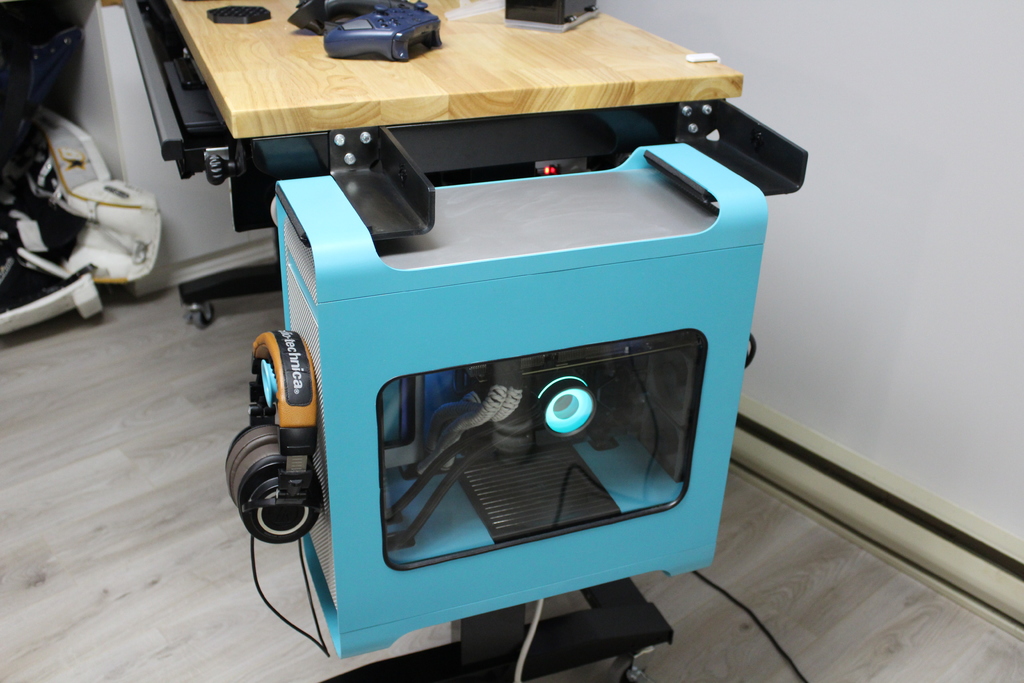
I’ve designed my office to be self-contained. With renting and moving semi-regurlarly, building an office that is indipendant of its surroundings means consistency between moves. In theory, as long as I had electricity, I could work just as efficiently in a rainforest as I could in an apartment.
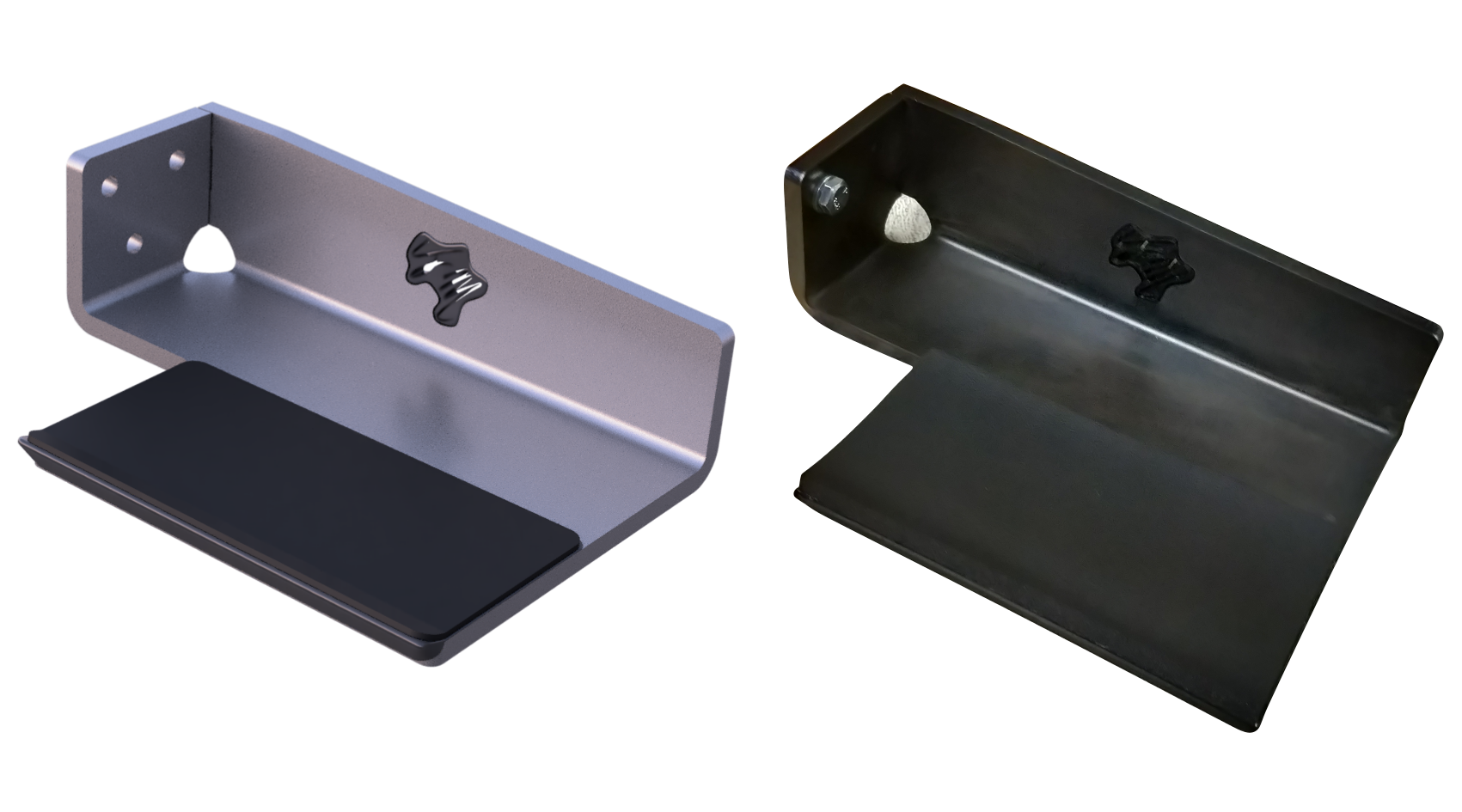
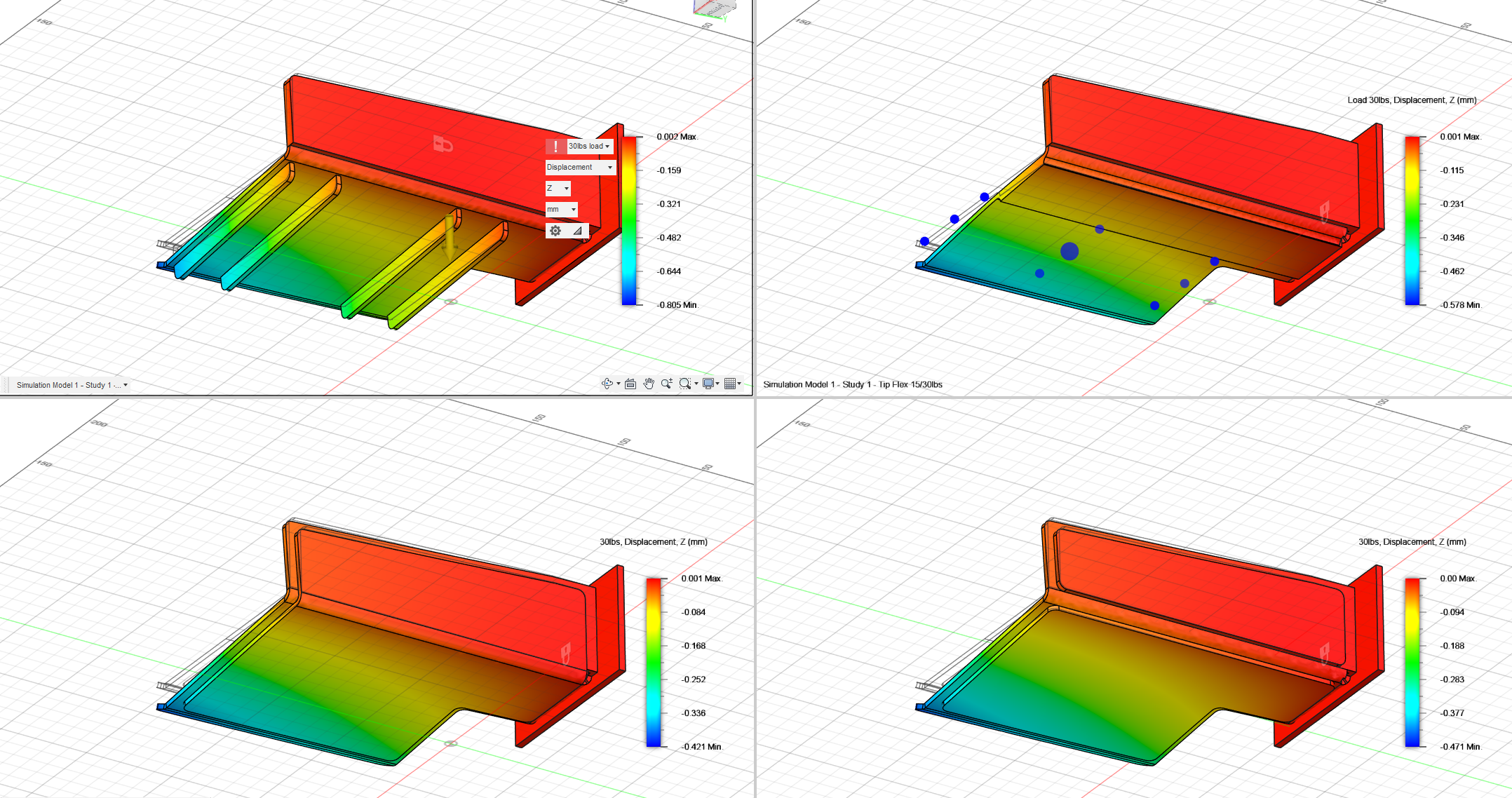
To make good use of my limited table space, I designed and simulated a pair of steel brackets to hang my Mac G5 from the desk’s edge. I took this as an opportunity to learn the basics of FEA simulation tools, and to learn the processes for designing sheet metal parts to be manufactured by a third party.
The CAD was done parametrically, both for key measurements and design features. Parametric design allowed for quick, side-by-side comparisons of multiple configurations. I incorporated feedback from friends with mechanical and structural engineering backgrounds, learning correct simulation setup and targeting appropriate amounts of displacement.
The final design was chosen based on its balance of cost, post processing work (welding/painting), and shared aesthetic with the rest of the desk. I learned a lot about the square cube law for bending strength of materials (geometric scaling of strength), opting for a design using 6.3mm A36 HRPO steel instead of two welded plates of 3mm A1008 CR steel or a ribbed configuration. A signature pendant and liner were 3D printed. The pendant accomodated the limitations of the lazer cutting process, and the liner allows the padding to be swapped out if it were to ever wear down.
This project was originally intended as a one-day-build, but spiraled into a multi-week long learning filled undertaking.
Proficientcies
Media
Further Readings
